Resurrection - Mahler 2 Saturday, June 6, 2026 at 7:30PM

“RESURRECTION”
MAHLER 2
MICHAEL NEWNHAM | CONDUCTOR Saturday, June 6th, 2026 at 7:30PM
Gustav Mahler
1860-1911
Symphony no. 2 in c minor “Resurrection”
Allegro maestoso
2. Andante moderato
3. In ruhig fließender Bewegung
4.“Urlicht”
5. Im Tempo des Scherzos
90 minutes
Leslie Ann Bradley, Soprano
Simona Genga, Mezzo-Soprano
Orpheus Choir of Toronto
RESOUND Choir
N.B. There will be no intermission this evening.
MUSIC DIRECTOR’S MESSAGE
Welcome! At the end of a very ambitious season, we bring you one of the most epic works ever written for a symphony orchestra along with choir and two soloists. When a performance of Mahler’s Second Symphony, (known as the “Resurrection”) occurs, it is always an event to be remembered.
It is not just the size of the forces required to perform this work which makes it so important. There have been even larger works written by other composers. But it is the scope of the vision, which asks questions that everyone asks themselves. What is the meaning of life and where are we going? How will the world end and what happens afterward?
It is through the sheer force of Mahler’s vision, his genius in writing memorable, beautiful (and sometime deliberately not beautiful) music, his mastery of the sound of an orchestra, and his ability to keep a listener engaged over an hour and a half which contributes to some of the reasons why it is always worth hearing this piece.
Gustav Mahler was also one of the greatest conductors of his generation, and maybe of all time. During the six or so years that took him to compose this symphony, he was developing a brilliant, but exhausting career as a virtuoso of the baton. During the six or so years that he took to compose this symphony, he was developing a brilliant, but exhausting career as a virtuoso of the baton.
Tonight’s performance is the result of a very long-cherished dream to be able to bring Mahler’s “Resurrection” Symphony in its full, original orchestration to life on this stage with Orchestra Toronto. We are very delighted to be joined by soprano Leslie Ann Bradley and mezzo-soprano Simona Genga, as well as two wonderful choirs: the Orpheus Choir of Toronto and the Resound Choir, both under the direction of Thomas Burton.
I would like to thank the members of the orchestra, the board and staff, with special thanks to our Executive Director, Alysha Addetia, and Board Chair, Melissa Cavelti, for the huge effort that they put into making this performance a reality. And I would like to thank all of you from the bottom of my heart for joining us tonight for this important performance.
MICHAEL NEWNHAM
MUSIC DIRECTOR
MESSAGE FROM THE CHAIR
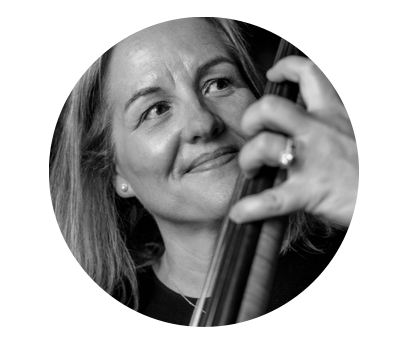
Melissa Cavelti, CFA, Chair
As our 2025/26 Season of Transformation comes to a close, I find myself reflecting on the profound role music plays in our lives.
Music connects us—linking strangers and friends, memory and emotion, past and present. Throughout this season, Orchestra Toronto has shared many of those moments of connection with you through our programming.
In December, our Sultans of Strings holiday concert reimagined seasonal music through a global lens, blending traditions from flamenco to Turkish and Caribbean styles. Our first-ever film music concert welcomed new listeners who discovered the excitement and emotional power of a live orchestra. In April, “Pardon Our French”, featuring George Gershwin’s “An American in Paris”, explored themes of arriving in a new city and finding connection through music.
Community orchestras, like Orchestra Toronto, play a vital role in keeping orchestral music accessible, bringing musicians and audiences together, while nurturing future performers and listeners.
For me personally, music has been a guiding force since I was a teenager and first began playing the bass. Performing in an orchestra was the first time I felt a true sense of belonging and the joy of contributing to something larger than myself.
Although I stepped away from music for much of my adult life for a career in finance, returning through Orchestra Toronto in 2019 rekindled that sense of connection. In 2024, I was involved in a serious accident and my recovery continues today, including adapting to deafness in one ear. During that difficult time, the community I found in Orchestra Toronto became an essential source of strength and motivation, reminding me that music connects us not only through the sounds we hear, but also through the people who share it with us.
In many ways, my own journey has reflected the theme of our season—transformation—and the unexpected ways music and community can help guide us through it.
Orchestra Toronto’s work is made possible through the generosity of our donors, sponsors, and volunteers. Your support allows us to present ambitious programming, welcome new audiences and provide opportunities for musicians to perform and grow.
As Chair of the Board, I am deeply grateful to our musicians, Music Director, Executive Director, volunteers, donors, and all of you who join us in the audience. Thank you for being part of this musical journey with us.
Programme Notes
Gustav Mahler’s Symphony No. 2 unfolds less as a conventional symphony than as a sustained philosophical meditation on death, memory, and transcendence. Composed between 1888 and 1894, it stretches the Austro-German symphonic tradition to its limits, absorbing elements of song, ritual, and drama into a single, expansive form. While Mahler resisted fixed programmatic interpretations, he framed the work around existential questions about suffering, purpose, and whether anything endures beyond death.
The first movement, originally titled Totenfeier (“Funeral Rites”), stages a confrontation with mortality in stark, destabilizing terms. Echoes of Ludwig van Beethoven’s funeral march tradition are present, but Mahler fractures the form from within: themes rupture, harmonic ground shifts, and any sense of resolution is withheld. The result is not closure, but crisis.
A contrasting second movement offers a fragile memory of an idealized past. Cast as a gentle Ländler (traditional rural partner dance from Austria, Bavaria, and Switzerland), it evokes nostalgia while subtly undermining it; beneath the surface of grace lies a sense that this world of innocence is irretrievably lost. The third movement, drawn from Mahler’s setting of Des Knaben Wunderhorn, turns instead to irony and repetition. Its circling, restless motion suggests the absurdity of existence - activity without progress, meaning dissolving into mechanical recurrence.
In the brief fourth movement, Urlicht (“Primal Light”), a contralto voice enters with disarming simplicity, articulating a quiet, deeply human longing for redemption. This moment of inwardness prepares the vast final movement, where Mahler expands the symphony into a cosmic scale. Fragmented episodes of marches, eruptions, and silences gradually give way to the hushed entrance of the chorus, setting lines by Friedrich Gottlieb Klopstock alongside Mahler’s own text.
The “Resurrection” that follows is not a straightforward triumph, but a hard-won transformation. Mahler does not offer certainty so much as the possibility of meaning—something that must be forged through struggle, memory, and the act of listening itself.
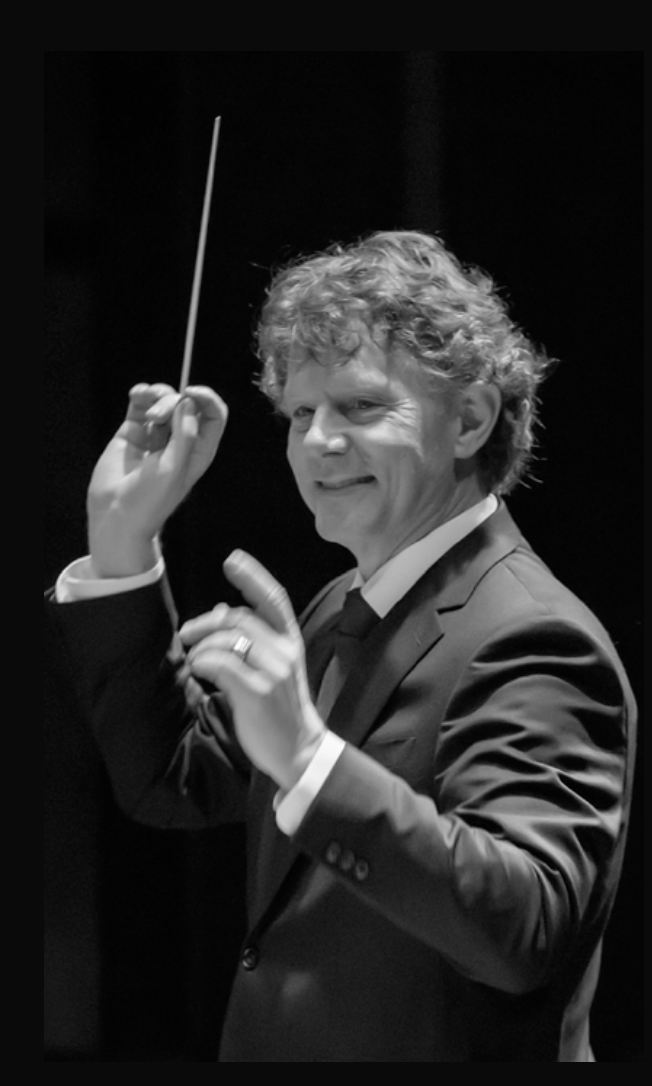
Michael Newnham
Music Director
Michael Newnham is best known for his intense and inspiring conducting style, based on a deep knowledge of the score and informed by a strong interest in languages, cultures and history. A born communicator, his open and direct contact with musicians and audiences creates performances full of expression and energy.
Along with being Music Director of Orchestra Toronto, he is also Music Director of the Peterborough Symphony Orchestra, and also held that title with Symphony New Brunswick and Camerata NB. Newnham has been instrumental in bringing these ensembles to new artistic heights and raising their profile on the provincial and national level.
Along with appearances in his native Canada, Newnham has also appeared at the helm of many orchestras and opera companies throughout Poland, Slovakia, the Czech Republic, Hungary, Austria, Italy and South Korea.
Endowed with a special passion and gift for working with young musicians, Michael founded the Kawartha Youth Orchestra in 2002, and has been a faculty member as conductor and chamber music coach at Music at Port Milford for several years. His involvement in educating young musicians is not limited to Canada. He spent two years as Guest Professor and Orchestra Conductor at Taegu-Hyosung University in South Korea.
Originally from Hamilton, Newnham is a graduate of the conducting class of prof. Bogusław Madey at the Chopin Academy of Music in Warsaw, Poland. He also studied at the Indiana University of Music and at the University of Toronto. A recipient of several awards, including the “Order of Merit” from the Republic of Poland, the “Best Conductor” Award from the East Slovakian State Opera, Newnham was recently granted the Turzanski Award for his services in promoting Polish music and culture in Canada.
Collaboration with Canadian composers has been central to Newnham’s life in music. In the summer of 2005, he was specially honoured to have been chosen by R. Murray Schafer to be the Music Director of an acclaimed production of Schafer’s “Patria: The Enchanted Forest”.
Before taking up the baton, Newnham began his musical career as a trombonist, playing with the Toronto and Kitchener-Waterloo Symphonies, as well as a member of the National Youth Orchestra of Canada. He currently lives in Peterborough with his wife, cellist Zuzanna, two daughters, and three cats, and is a home barista.

ABOUT ORCHESTRA TORONTO
Founded in 1954 as the Bennington Heights Community Orchestra and rebranded as Orchestra Toronto in 1998, our organization stands as a testament to the enduring power of music in building connections and enriching lives. From its humble beginnings, Orchestra Toronto has grown to become one of Canada’s oldest and largest volunteer orchestras, proudly serving the Greater Toronto Area and beyond with passion and dedication.
As we look towards the future, Orchestra Toronto remains steadfast in our commitment to entertaining and inspiring diverse communities. We envision a world where the love of symphonic music is embraced by future generations, and we are dedicated to making this vision a reality.
Join us on this musical journey as we continue to enrich lives, foster connections, and celebrate the transformative power of music.